





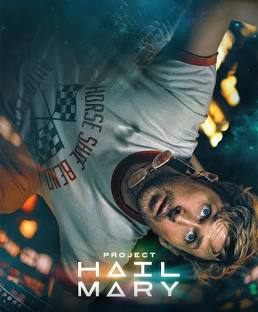
A new film by Director Drew Goddard called Project Hail Mary creates a compelling, attention grabbing visual adaptation of the 2021 novel by Andy Weir (author of “The Martian”) with the use of cinematography, suspense, and heartfelt scenes. All encouraging the viewer to want to see more.
In the film, we follow the main character Dr. Ryland Grace (played by Ryan Gosling), as he wakes up to find himself as the sole survivor on a space ship with gaps within his memories. The film uncovers the intricacies of his memories as he desperately travels on a mission to save humanity from an interstellar threat.
The film goes on to use its cinematography to put you on the edge of your seat via its lighting and filming angles to push the viewer into fear of what happens next before providing much needed relief as you watch the other characters–like Rocky, an rock-like alien who is voiced and puppeteered by James Ortiz–struggle, within the plot. One example of this is the scene where Dr. Grace meets Rocky, which to myself and others watching, caused us to jump in our seats due to the dramatic lighting and sound design.
Additionally, the film uses these elements to purposefully omit information to the viewer throughout the story to create a larger impact and allows the viewers to slowly understand Dr. Grace, while also getting you attached to his goals. It is able to do this due to how director Goddard aptly uses the film’s longer run time, 2 and a half hours, to build up the story rather than rushing it like you see in some newer movies today. It slowly incorporates you into the world using various scientific explanations and social commentary to build up the viewer’s understanding rather than plainly explaining everything or dropping you into situations with no context. Overall I enjoyed Project Hail Mary and believe it is a must watch for everyone who likes science fiction with heartfelt companionship.